
Video Interviewing Workshop - New Life Church
Pre-production
• Make a creative call to either give the questions ahead of time or just give them an idea. More natural response comes when you ask them the question off the cuff and they don’t have premeditated answers prepared.
Lighting:
- Preserve your talent. Use a "stand in" for making your camera and lighting adjustments. Its OK to make minor adjustments once the talent stands in (usually camera height, audio levels).
- Start with your Key light, then add fill, then add back light
- Set color balance (temperature)
- If you only have 1 light then use the key light and hit them on a 45 degree angle
- adjustments might need to be made if subject wears reading glasses (ask if its ok to take them off, if they are comfortable with that if the reflection is distracting)
Body posture
- Have your subject stand is a safe bet
- If they need to be seated use a stool (have them seated with straight posture, not slouched). If they are in a chair have them lean forward toward the camera (this makes them seem more engaged). It’s not flattering or exciting to have them reclined on a couch.
- When possible, have someone else on set approve your framing before you begin (usually the client).
Eye line
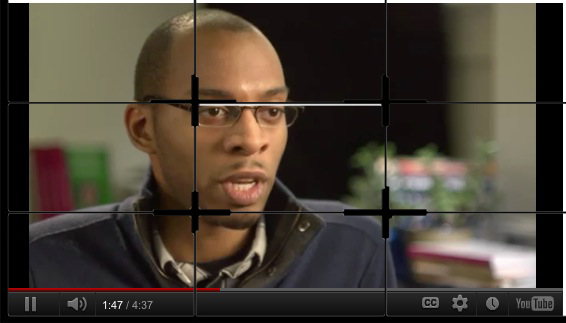
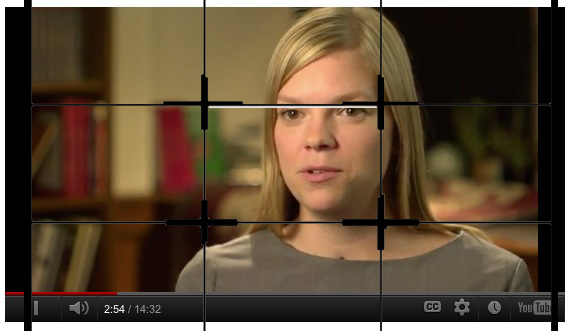
- You want the eye line of the lens to be at the same level as your subject. Unless, for creative reasons, you want to shoot up or down on them. Up is a heroic shot and down makes them thinner. Usually a bit of a down shot is flattering for a woman when you photograph them for instance. The person asking the questions should be at the same eye line as well.
- Make a creative choice to either have them look directly into the lens or have them look off camera. Usually if they are speaking to the audience you have them speak into the lens. If its not necessary then its easier for them to look off camera and speak to someone (the interviewer). Make sure they don’t glance back to the camera (tell them to pretend like the camera is not even there).
Audio
- Listen to the room tone before you begin (excessive noise that might make the interview unusable) - HVAC, traffic noise, construction, etc
- 2 ways to record audio mainly for interviews: directly into camera or separately through an audio recorder but requires syncing in post (how they do proper films)
- All phones set to silent
- Monitor the interview with headphones, if you notice something during the interview, let them finish and then ask them to repeat their answer or just a certain part (sometimes just as a safety)
Multi camera
- Standard framing would be waist up for your wide shot, and shoulders up for your tight shot. You can get creative with the angles, as long as it doesn’t cross the eye line (i.e. 1 camera coming from the right or left of the eye line).
- The main advantage is being able to edit and there not to be abrupt jump cuts. Work around to this is to add B-Roll (quotations, photographs, other footage, power point slides, etc)
- If you have the ability to shoot 4k and the final deliverable is 1080 then you can crop in post to have the illusion of 2 cameras.
Interviewing Tips
- Remember that the subject (if they don’t do this often) are likely nervous to be on camera. They might start off rough and get more comfortable as they go. Sometimes i’ll have them repeat question 1 again at the end (e.g.. their introduction) because they are warmed up by this point.
- We are after naturally sounding answers (i.e. conversational). So its best if its not scripted and its your job to ask good questions to draw these sound bites out of them.
- Work around to this is a teleprompter however that opens up another area of issues.
- As they give you the answers you (or the interviewer) is making eye contact with them, engage with them and nod your head. Resist the urge to speak to them.
- Determine if you need them to work the question into their answer since the video wont hear you asking them.
- Have subject speak with more energy than normal
- FAQ, “will you be able to edit my answers?”. Assure them it is and that you can redo any questions or start over from the beginning at any time.
- Usually ask them the same question twice - the 1st time let them talk, 2nd time ask for condensed version (15 or 30 seconds?)
- Think like an editor when you interview (listen for good sound bites), have them repeat that specific part in a more concise way if necessary.
- Last questions: “Is there anything else you would like to add to this interview?” (50% of the time they do have something to say) - this takes the pressure off of you for a second and lets them get something off their chest. Sometimes i’ve gotten the best sound bites out of this, its the most natural sounding.
Etiquete
- If you think its going to take 15 minutes, tell them 1 hour. Under promise, over deliver. Have a gift as a 'thank you' for their time (ex. gift card) - this goes a long way. Especially since we are usually not paying them.
- Make sure they understand that even though the interview might be 15 minutes, you might only be using 30 seconds of their interview or possibly nothing at all. In some cases, some people are terrible on camera and you can’t use them at all. If you shoot 5 interviews, expect 3 to turn out.
- Have a glass of water for them on set.
- If you need to put the lav microphone on the opposite sex have them do it themselves or have the same gender as part of your crew to help them with adjusting the mic
- Before you start, less people in the room the better, this helps with distractions. (camera man, director, interviewer, etc). If you are interviewing multiple people have other people wait outside so they don’t intimidate the person on camera.
- Don’t interrupt your subject when they are answering, let them finish, just in case they say something golden you weren’t expecting. Of course there are always exceptions. Forsure if there is a technical issue and you need them to start over anyways its not rude to tell them to stop (saves their time)
Additional resources
Interviewing Video Resources:
https://www.youtube.com/playlist?list=PLY8VJNfM8AbHoH-uzl7DD2KgP4AxeX9Re